Guides
The bookkeeping routine that keeps a coworking space solvent
Coworking bookkeeping tracks desk months, meeting room hours, access control, mail handling and compliance costs so the month closes without surprises.
What to take away
- Bill desk months and room hours on separate revenue lines, because a member who books four hours of meeting room a week is not the same account as one who books none.
- Deferred revenue is a liability, not income. Membership paid in advance sits on the balance sheet until the month it covers is delivered.
- Access control and insurance are lumpy costs. A quiet quarter followed by a large bill is normal, so fund them monthly rather than when the invoice lands.
- Reconcile the booking system against the bank every month. Unrecorded room bookings and comped day passes are the two leaks that hide longest.
- The IRS recordkeeping guidance at What kind of records should I keep? sets the floor for what you retain. Your CPA sets the rest.
This article covers general coworking-business practice, not individualized tax, lease, insurance or legal advice. Requirements vary by jurisdiction and by your membership terms, so confirm current duties with a licensed CPA and attorney.
The two revenue lines most spaces blur
A coworking ledger has two products, and they behave differently. Desk months are recurring and predictable. Room hours are spiky and tied to who happens to be in the building that week.
Blur them into one "membership revenue" line and you lose the ability to see which one is carrying the lease. Split them and the picture sharpens fast: a space at 80% desk occupancy can still be losing money if the meeting rooms sit empty and the CAM charges are high.
Keep a third line for one-off income. Day passes, printing, event rentals and mail handling are small individually and material in aggregate.
Where the money actually goes
| Cost line | Behaviour in a coworking space | Watch for |
|---|---|---|
| Base rent and CAM charges | Fixed monthly, plus annual escalations | Reconciliation statements that arrive months late |
| Access control hardware and software | Lumpy: quiet, then a large bill | Fobs and readers failing when a large member leaves at once |
| Insurance and compliance | Non-negotiable once licensed | Certificates that lapse unnoticed |
| Utilities and internet | Scales with occupancy, not linearly | Bandwidth upgrades absorbed quietly |
| Staffing | Flexes less than it looks | Community manager hours spent on unpaid tours |
| Cleaning and consumables | Rises with desk count | Supplier increases passed through without review |
The monthly close, in order
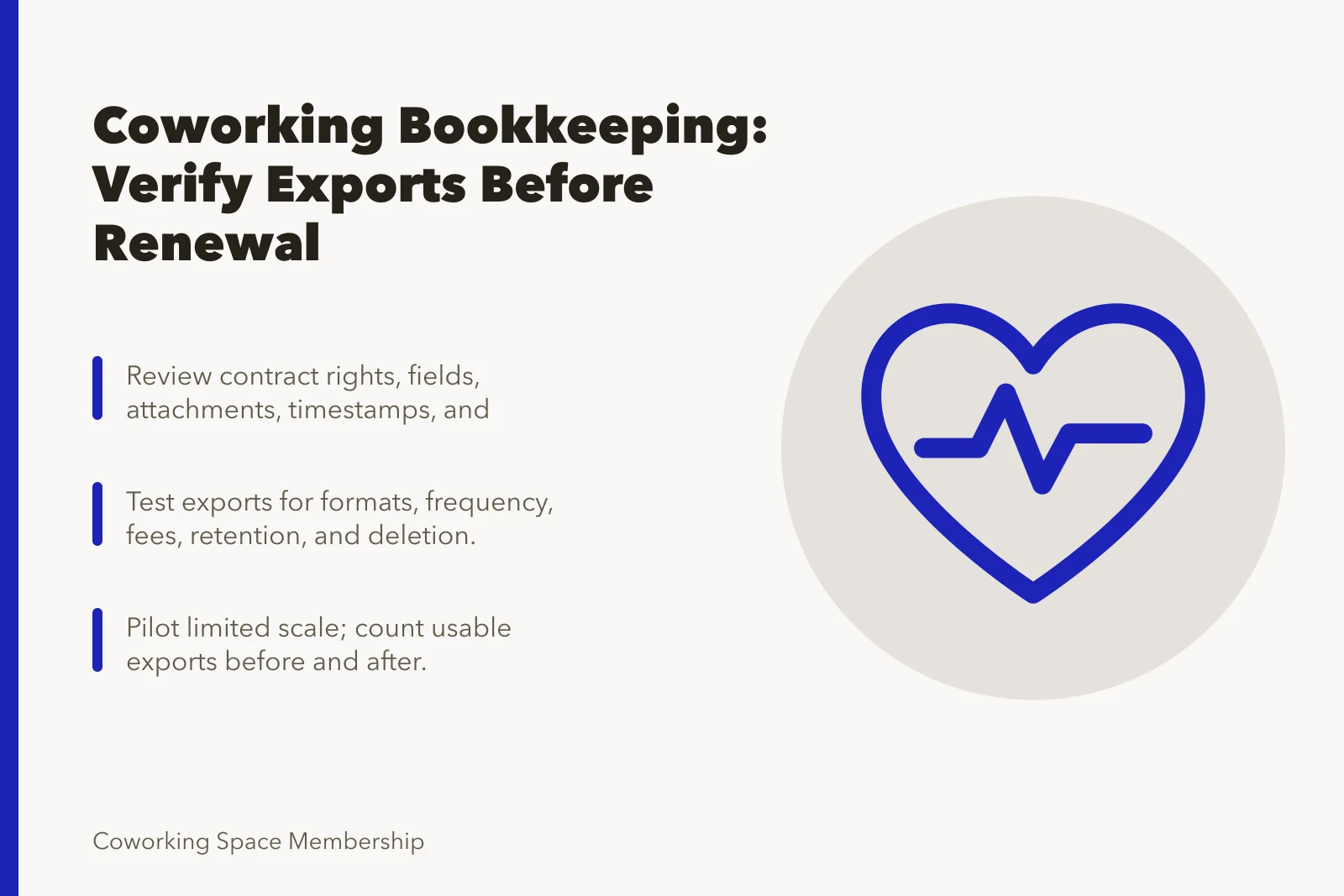
- Export the booking system for the month: desk assignments, room hours, day passes, cancellations.
- Match that export against the bank deposit. Every gap is either a comp, a refund or an error.
- Post deferred revenue: move the portion of advance memberships earned this month from liability to income.
- Reconcile CAM and utility charges against the landlord's statement.
- Review occupancy and churn against the coworking space software and KPI guide before setting next month's targets.
- File the access logs, insurance certificates and signed agreements where the next review can find them.
Access control is a bookkeeping problem too
Every fob issued is a small liability. A member who cancels but keeps building access is a security problem and a revenue problem at the same time.
Reconcile the active fob list against the paying member list monthly. The gap is usually small and occasionally alarming. Treat deactivation as part of the cancellation workflow, not an afterthought.
The same discipline applies to insurance certificates. If your membership agreement requires members to carry liability coverage, someone has to check that the certificate is current. That is a bookkeeping task with a calendar attached.
Records and the security baseline
Two external references are worth keeping on file. The NIST Small Business Quick-Start Guides give small organizations a practical starting point for risk management, including the Cybersecurity Framework 2.0. The CISA small business guidance collects current resources aimed at common operational risks.
Neither replaces your own controls, but both give you a defensible baseline to point at when a member asks how their data is handled.
Common questions
How should advance memberships be recorded?
As deferred revenue, a liability, until the month they cover is delivered. Your CPA will confirm the treatment for your entity and jurisdiction. Recording the full annual payment as income in month one overstates the year and understates the next.
What is the single most useful monthly number?
Net cash after rent, CAM, payroll and compliance costs, per occupied desk. It tells you whether the space is actually working, not just full. Track it monthly and watch the trend rather than any single month.
Do room bookings need their own accounting?
Yes, if you want to know whether the rooms pay for themselves. Track hours booked against hours available, and the revenue per booked hour. A room at 20% utilisation is a cost centre pretending to be an amenity.
How often should the books be reviewed?
Monthly close, quarterly review with your CPA, annual review of lease escalations and insurance limits. Anything less and problems compound quietly between reviews.