Guides
ADA compliance for coworking spaces: what operators get wrong
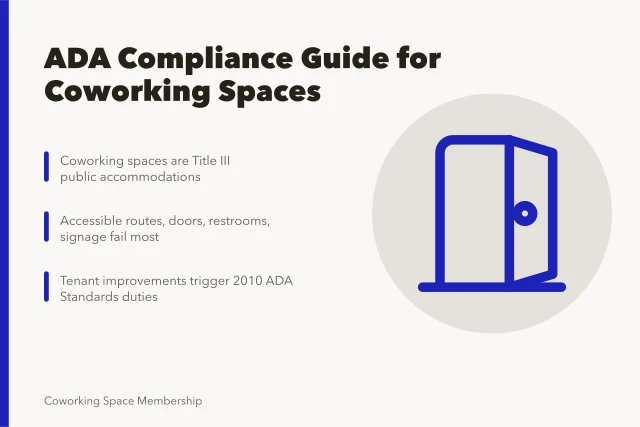
ADA compliance for coworking spaces depends on daily operations. Blocked routes, high counters, wrong restroom signs, and service animal errors cause legal trouble.
What to take away
- Title III of the ADA covers coworking spaces as places of public accommodation, but state laws like California's Unruh Act can add higher penalties.
- The biggest access failures are often not front doors. They are event layouts, stored furniture, counter heights, service animal policies, and restroom signs.
- Problems stay hidden until a member cannot enter, a visitor files a complaint, or a state inspector checks the lease file.
- Fix the batch-ruining route first: entrance paths, door pressure, restroom clearances, and the space between the front desk and the first seat.
An operator placed four high-top tables for happy hour across the main aisle. The tables narrowed the accessible route from the entrance to the restroom to 28 inches, and a wheelchair user could not pass.
The U.S. Department of Justice lists coworking spaces as places of public accommodation under Title III ADA obligations. Removing the tables would have been readily achievable.
Consequence: a DOJ investigation, a request for a remediation plan, and potential attorney fees for the complainant. In California, the same blocked route could trigger statutory damages under the Unruh Civil Rights Act.
Prevention: before any event, walk the route from the street entrance to the restroom and the nearest exit. Use a 36-inch clear width as the check. Do not let temporary furniture reduce that width. For a longer lease-level look, read the ADA compliance guide before signing a lease or publishing event layouts.
Title III requires a public accommodation to remove architectural barriers where doing so is "readily achievable." A movable table is one of the easiest barriers to remove.
The ones that only affect quality
These errors rarely trigger a lawsuit on day one. They push members with disabilities toward another space.
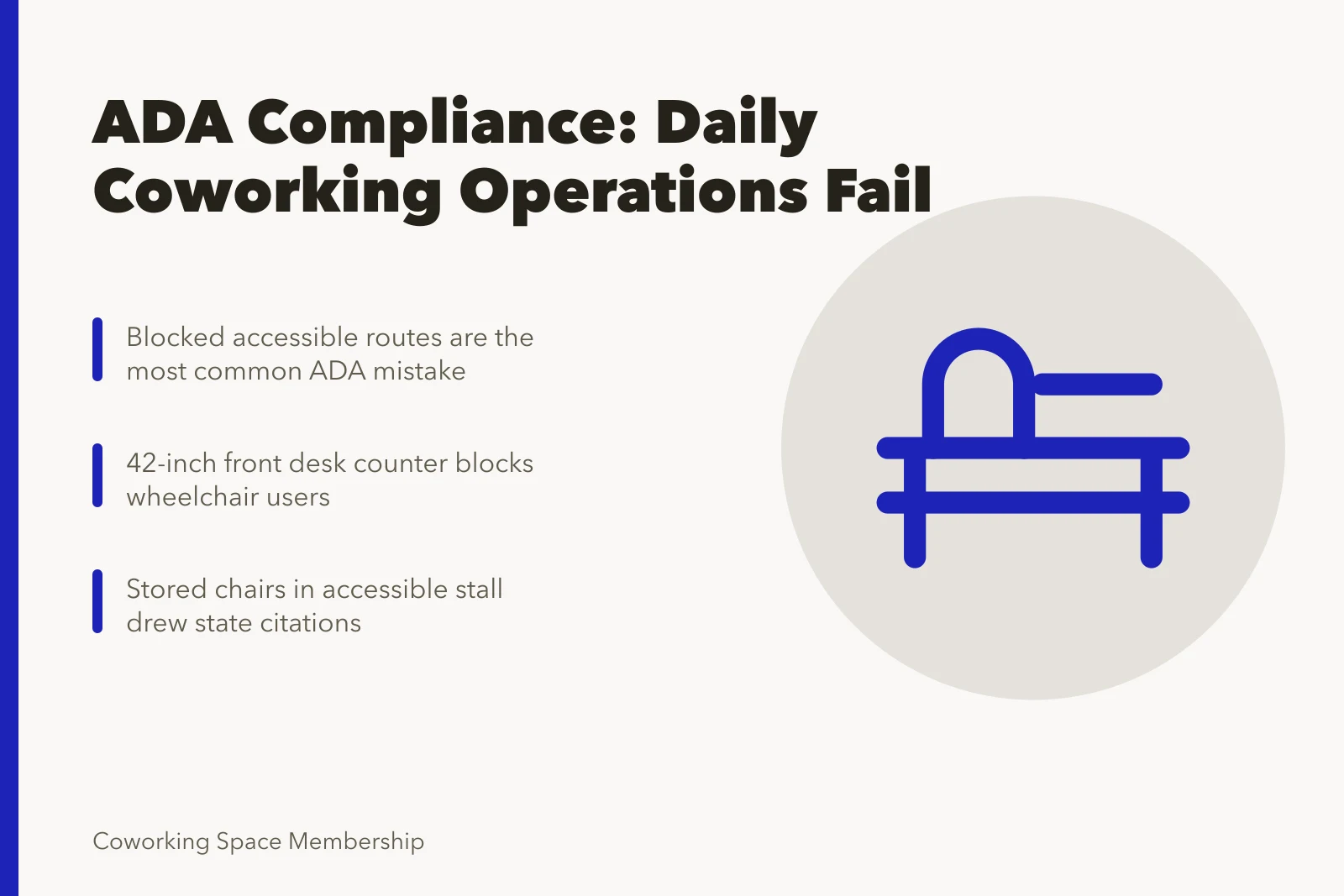
A front desk counter set at 42 inches leaves a wheelchair user staring at the underside of a shelf. A single-user restroom with an old "men" or "women" sign instead of the required tactile sign confuses a blind visitor.
A membership manager who asks a person with a service animal for registration papers violates federal rules.
Consequence: negative reviews, lower renewal rates, and a legal record that looks careless if a complaint later arrives. The ADA service animal requirements allow two questions only: whether the dog is required because of a disability, and what work or task the dog has been trained to perform.
Prevention: put a 30-inch section of counter at 30 to 34 inches high, check restroom signs for raised characters and braille, and train front desk staff on service animal basics. Use a Coworking space training checklist that includes access questions.
The ones that show up in storage
The operator of a converted warehouse space stored three boxes of spare chairs in the accessible restroom stall. Nobody noticed for four months. A member who used a wheelchair could not use that stall during a month when the upstairs restroom was closed for repair. The problem had not existed when the space opened.
Consequence: the member could not use the restroom on two floors, and a complaint followed. State accessibility inspectors in Washington and Massachusetts have cited stored items that reduce clear floor space.
Prevention: assign storage rooms away from accessible routes, restroom stalls, and door swing clearances. After every delivery, check that boxes, folding tables, and extra chairs have not been placed in a route or a stall. Put the responsibility for keeping storage clear in membership agreement terms.
What they have in common
The missed items are operational, not architectural. They disappear from a lease checklist but return as daily habits. A space can pass a buildout inspection and still fail a member on a Tuesday because a chair was moved into a route.
Consequence: recurring complaints, higher legal exposure, and rework that costs more than the preventive check. State laws in California, New York, and Illinois allow private lawsuits with damages and attorney fees.
Prevention: make the access check part of the closing routine, not an annual event.
- Clear the entrance route to the restroom, kitchen, and at least one exit before opening.
- Check restroom signs, door pressure, and clear floor space after morning cleaning.
- Remove stored items from accessible stalls and door swing areas before the first member arrives.
For technical dimensions, refer to the ADA accessibility guidelines from the U.S. Access Board. Add access checks to monthly member feedback through Measuring service quality.
Common questions
Does Title III of the ADA apply to coworking spaces? Yes. The Department of Justice treats places of public accommodation broadly. A coworking space that sells day passes or memberships is covered if it affects commerce.
What is the most common ADA mistake in a coworking space? Blocked accessible routes. Tables, cables, boxes, and stacked chairs get placed in paths that were clear during the initial inspection.
Can a state law create more liability than the ADA? Yes. California's Unruh Civil Rights Act, New York City's Human Rights Law, and similar state laws allow damages and attorney fees beyond federal remedies.
Do service animals have to wear a vest in a coworking space? No. Federal rules do not require certification or special equipment. Staff may ask only the two questions permitted by the ADA service animal requirements.