
Guides
Coworking space equipment checklist, from essential to optional
A coworking space equipment checklist runs from desks and chairs to printers and kitchen gear, ranked by what members notice first and what they rarely miss.
What to take away
- Buy the coworking space equipment checklist in orderdesks, task chairs, power, Wi-Fi, coffee, then a lockable meeting room door.
- Price each item by cost per desk, not sticker price. A $600 chair over five years reads as $10 a month.
- Put a named owner and a review date on every line, or the checklist becomes a wish list.
- Track what members complain aboutchair failures, print jams, and meeting-room booking collisions.
- Confirm accessibility duties with your local authority having jurisdiction and a licensed inspector before buildout.
The essential tier: what members touch every day
A coworking membership sells a working desk, and the desk is the product. If the chair wobbles or the outlet is dead, the member cancels before the coffee runs out.
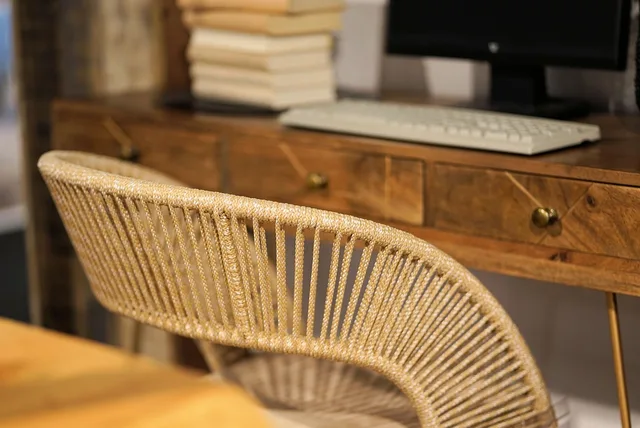
Start with the workstation. One desk and one task chair per hot desk. A 60-by-30-inch top on a steel frame runs $250 to $500 assembled. Add a monitor arm or riser at each dedicated desk. The Ergotron LX arm lists around $150, and a basic riser costs $30 to $60.
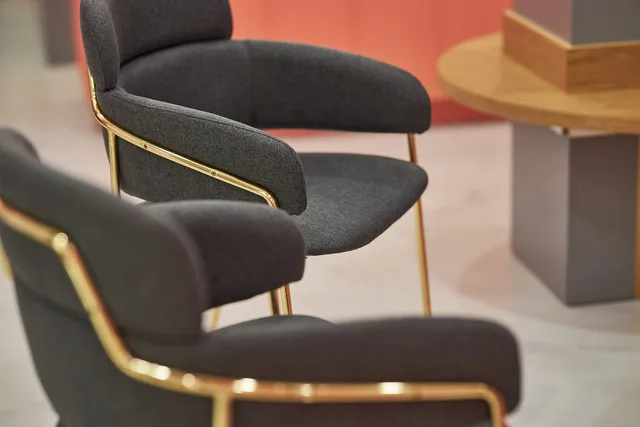
Task chairs carry the most weight. The Herman Miller Aeron lists near $1,400 new and about $600 refurbished. The Steelcase Series 1 sits around $450, and the IKEA Markus runs about $250. Buy chairs rated for the hours your members actually sit, not the cheapest unit a dealer quotes.
Power and network come next. Plan one duplex outlet per desk, through a Wiremold or Legrand raceway kit at $60 to $120 per drop. Add one Wi-Fi access point per 1,500 to 2,500 square feet of open floor.
A Ubiquiti UniFi 6 Pro runs about $160, and a TP-Link Omada EAP670 about $130. Verify coverage with a site survey rather than a vendor claim.
Count every line as cost per desk. A $600 chair over a five-year life is $10 a month per seat.
The coworking space equipment and setup guide covers how these choices fit a buildout budget.
The second tier: shared tools members expect
Members assume a printer exists and rarely ask about it until it jams. A multifunction laser with scan-to-email covers most small floors. The HP LaserJet Pro MFP M428fdw runs about $500, and the Brother MFC-L8900CDW about $550.
Add a label printer only if you run mail or package handling. A Brother QL-820NWB costs about $180.
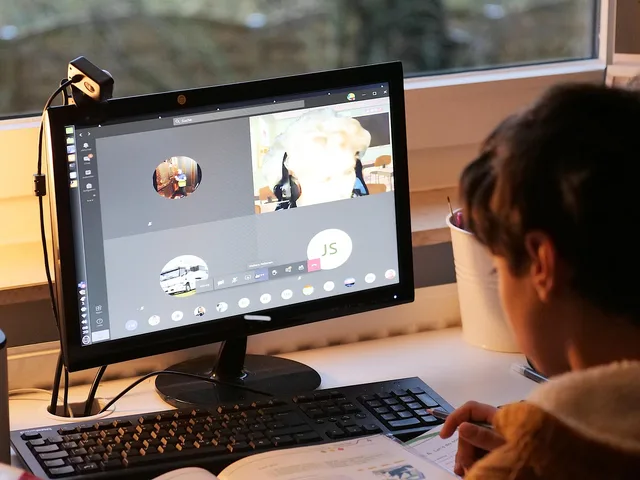
Meeting rooms need a display, a camera, a speakerphone, and a cable that reaches the far end of the table. A Logitech MeetUp bar lists near $900, and a Jabra Speak 750 speakerphone about $300. Test the video call from the seat farthest from the camera before you sign off on the room.
The kitchen carries more complaints per dollar than any other line. A commercial brewer such as the Bunn VP17-1 runs $400 to $500, and a Technivorm Moccamaster about $350. Add a refrigerator, a microwave, and a dishwasher if you serve food. Check the electrical load with a licensed electrician; kitchen appliances trip breakers in older buildings.
Cleaning and maintenance tools belong on the same list. A commercial upright vacuum costs $200 to $400, a mop system $100 to $200, and trash bins sized to your daily volume. Members notice a dirty bathroom faster than a slow printer.
The optional tier: what to add after occupancy stabilizes
Add these when occupancy holds above your break-even for two consecutive quarters, not before.
The optional tier
| Item | What it is | Who it suits |
|---|---|---|
| Phone booths (Framery One, ROOM One) | Sound-dampened single-person pods | Open plans with frequent calls |
| Height-adjustable desks (Uplift V2, IKEA BEKANT) | Sit-stand workstations | Members who ask for them by name |
| Event AV (Epson projector, Shure wireless mics) | Portable PA, mics, projector | Spaces that rent the room after hours |
| Lockers | Day-use or monthly storage | Hot-desk members who commute |
| 3D printer (Prusa MK4, Bambu Lab X1 Carbon) or workshop bench | Shared fabrication tools | Buildings with engineering or design tenants |
A Framery One pod runs roughly $18,000 to $25,000 installed and needs its own ventilation path. A ROOM One phone booth typically lands between $6,000 and $10,000. A locker bank costs far less and often pays for itself through a small storage fee.
Sit-stand hardware adds its own line. An Uplift V2 frame and top runs about $700, and the IKEA BEKANT sit-stand desk about $500. A Prusa MK4 3D printer kit runs about $800, with the assembled unit near $1,100, and the Bambu Lab X1 Carbon lists around $1,200.
Where the safety and accessibility lines sit
The OSHA Computer Workstations eTool walks through workstation components and work processes, which is the reference to hand a member who asks how to set up a monitor. It describes hazards; it does not set your furniture spec.
The OSHA Safety Management page explains a proactive program that finds and fixes hazards before an inspection does. For a coworking floor, that means a documented walk-through and a log of what got fixed.
Accessibility duties for an existing space are not a furniture decision. The Justice Department guide for small businesses explains barrier removal and readily achievable changes. Your local authority having jurisdiction and a licensed inspector decide what applies to your building.
Worked example: costing a ten-desk room
Take a ten-desk open room. At $400 per desk, $600 per chair, and $90 per desk for outlets and cabling, plus one $160 access point, first-year furniture and network spend comes to $11,060.
Divide that by ten desks and twelve months for about $92 per desk per month. Compare it against your hot-desk rate. If the monthly figure eats more than a small share of the rate, the room is priced wrong or the spec is too high.
Run the same arithmetic before you add phone booths or sit-stand desks. The optional tier should clear its own cost, not ride on the essential tier.
Common questions
How often should the checklist be reviewed?
Review it quarterly against member complaints and repair logs. Replace any item that fails more than twice a year, and reprice the whole list when your lease escalates.
Do I need a commercial coffee brewer?
Only if coffee is part of your membership promise. A consumer brewer on a ten-desk floor usually breaks within a year, and the replacement cost lands in the same budget line.
Who decides what counts as accessible?
Your local authority having jurisdiction and a licensed inspector, not a vendor catalog. The Justice Department guide explains the concepts, but the building official applies them to your space.