
Guides
Coworking membership rates in Austin, Miami and Denver: what you pay and get
Coworking membership rates in Austin, Miami and Denver, compared by hot desk price, contract terms, deposits, and upload speed at named spaces.
What to take away
- Hot desk rates at named spaces in Austin, Miami and Denver land between $250 and $400 a month, and the spread inside one city is wider than the spread between cities.
- Dedicated studio space runs $450 to $1,200 a month, usually with a waitlist.
- Published rates exclude deposits, printing, guest passes and meeting room hours, which can add 15 to 30 percent to the first invoice.
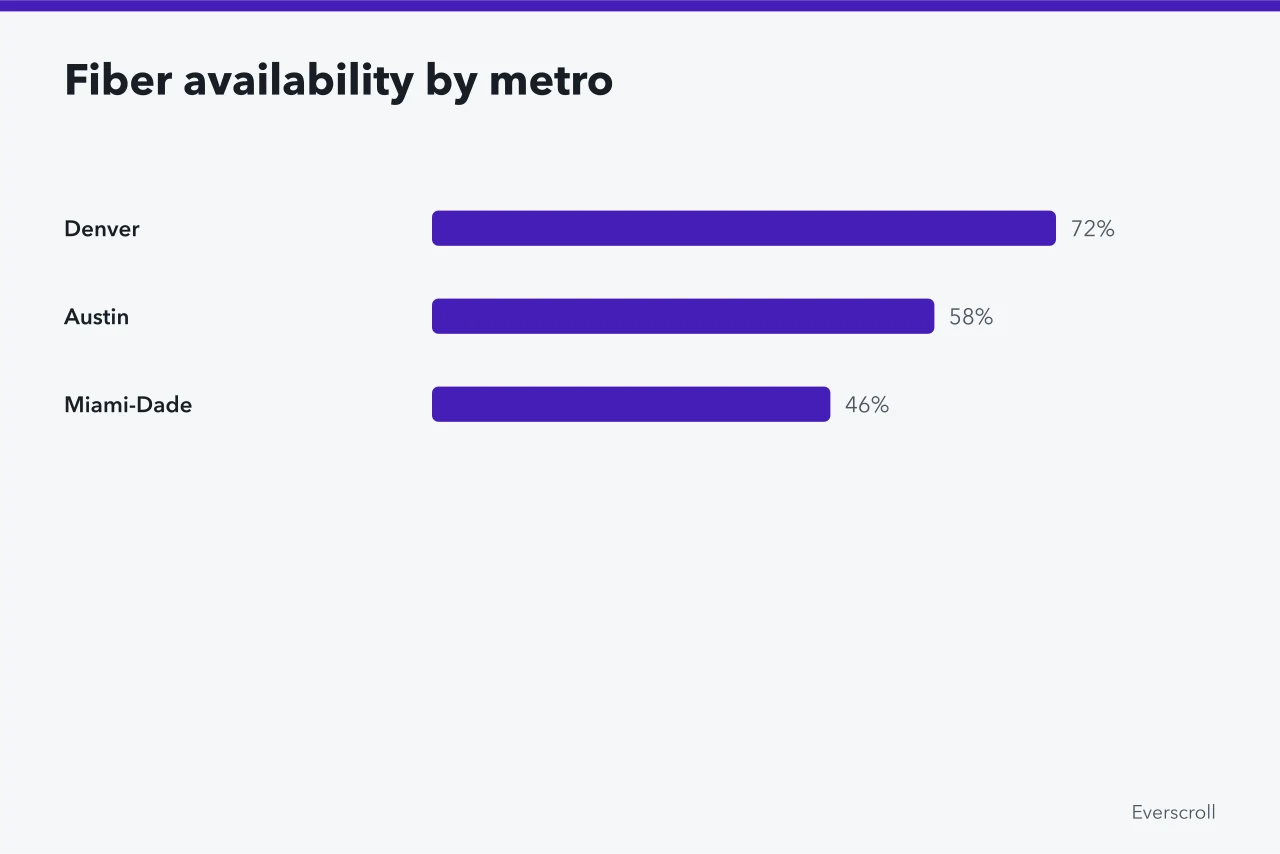
- Fiber availability limits upload-heavy membersroughly 72 percent of Denver metro housing units, 58 percent in Austin and 46 percent in Miami-Dade, per the National Broadband Map.
- The membership agreement decides how a member exits or upgrades, not the advertised desk price.
Hot desk rates at named spaces
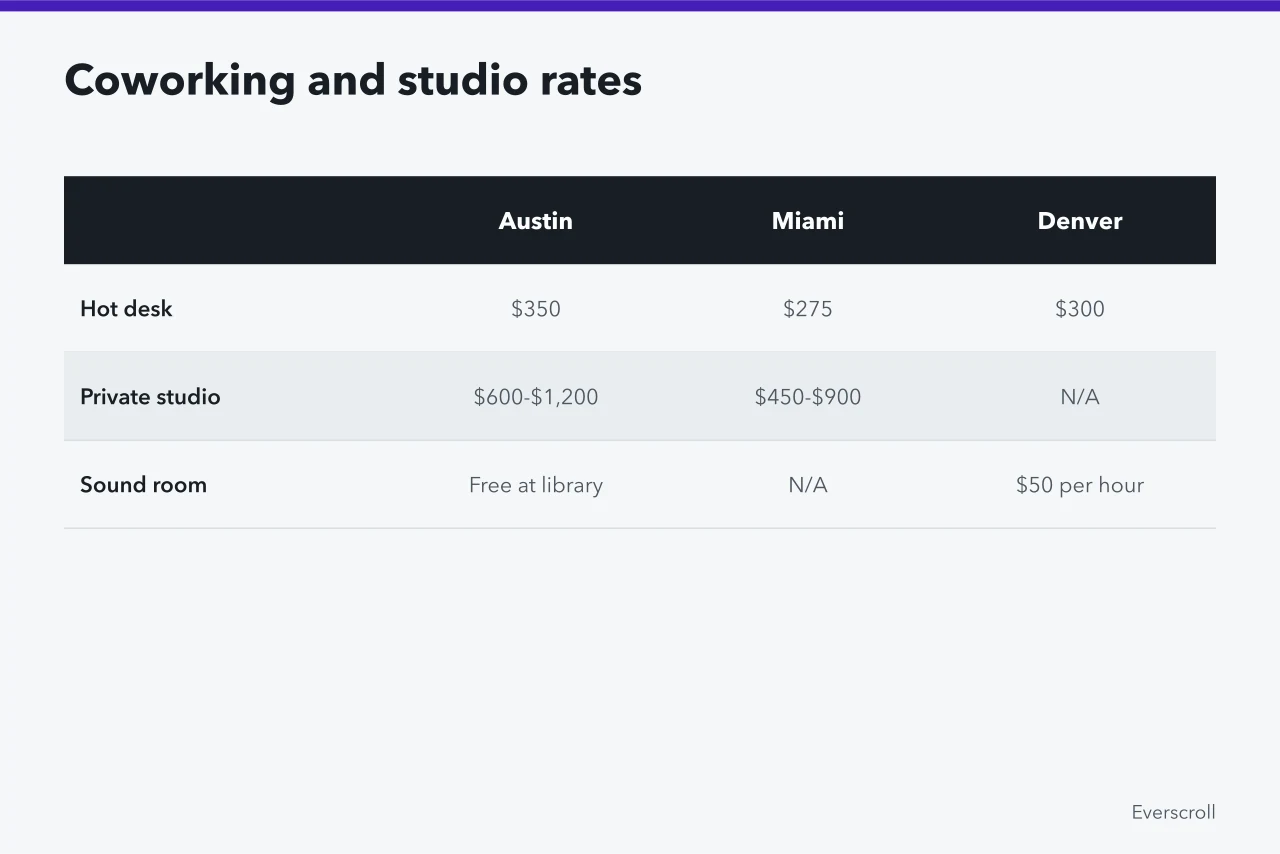
Buildings that publish a rate are the only honest starting point. Austin's Vuka quotes about $250 a month for a hot desk, and Capital Factory about $350. Miami runs from The LAB Miami near $275 to Pipeline Workspaces near $400.
| City | Space | Membership type | Published rate |
|---|---|---|---|
| Austin | Capital Factory | Hot desk | $350 per month |
| Austin | Vuka | Hot desk | $250 per month |
| Miami | The LAB Miami | Hot desk | $275 per month |
| Miami | Pipeline Workspaces | Hot desk | $400 per month |
| Denver | Industry RiNo Station | Hot desk | $300 per month |
| Denver | The Yard | Hot desk | $325 per month |
| Denver | Converge Denver | Hot desk | $250 per month |
| Denver | Denver Media Center | Sound room | $50 per hour |
Treat every list price as an opening number. Operators discount for a six-month commitment or a team of three, then raise the rate quietly at renewal. In Austin the lease terms Austin coworking operators should read twice carry more risk than the headline figure.
What the monthly fee includes
Most agreements name a rate and a start date, then push inclusions into a schedule nobody reads. Ask about printing allowances, guest passes, mail handling and the meeting room hours bundled with the desk.
Deposits are the first surprise. Many US operators hold one month's fee, and state law governs when it comes back, as Cornell Law School's overview of security deposits sets out.
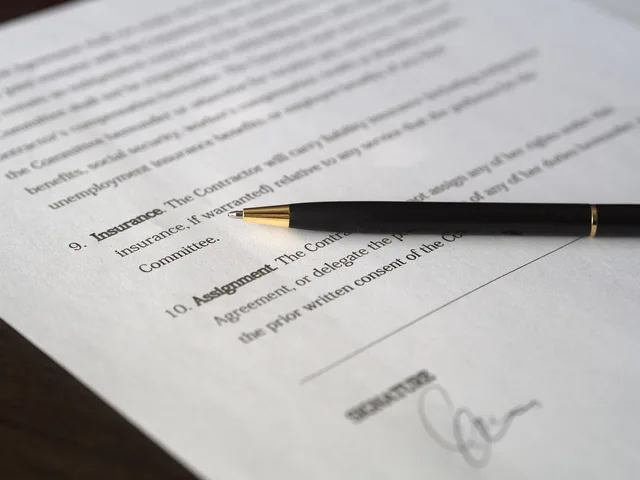
Churn starts with sloppy terms. Notice periods, auto-renewal and desk transfers generate most disputes, which is why coworking space membership agreement terms deserve a read before signature.
Internet bandwidth by metro
The National Broadband Map puts fiber availability at roughly 72 percent of housing units in the Denver metro, 58 percent in Austin and 46 percent in Miami-Dade County. Coworking buildings follow that pattern loosely.
Advertised residential tiers reach 1 gigabit where fiber exists. Cable uploads in the same areas often cap near 35 Mbps. The FCC's broadband speed guide gives the benchmarks that matter for video calls and file transfer.
Ask an operator what happens at 2pm on a Tuesday, when the whole floor is on a call. Shared fiber that benchmarks well on an empty Sunday morning behaves differently at peak, so coworking space internet bandwidth requirements should be planned around concurrent users.
Studio and production space
Media members need more than a desk. Bakehouse Art Complex in Miami rents studios at $450 to $900 a month, and Mana Contemporary at $500 to $1,200. Both run waitlists.
Austin's Springdale General lists private studios at $600 to $1,200. The Denver Media Center rents a sound-treated room near $50 an hour, which suits members who record once a week rather than daily.
Members who book rooms more than a few times a month should compare the hourly rate against an upgrade. Coworking space meeting room pricing covers where that break-even sits.
A checklist before signing
Run every quote through the same five questions.
- What deposit is held, and which state law governs its return?
- What happens to the rate at renewal, and how much notice must an increase give?
- How many meeting room hours are included before the hourly charge starts?
- What upload speed does the building guarantee at peak?
- What is the notice period to cancel, and is there a buyout fee?
Accessibility terms belong on that list too. Operators that rent to the public carry obligations under the ADA rules for places of public accommodation, and a certificate is not the same as a working lift.